- Home
- About
- Books
- Hole in the Donut: Scrape 22 2025
- It's Come to This 2023
- Man Before a Mirror 2022
- American Crow: Report from Quarantine 2021
- Bokeh: A Little Book of Flowers 2020
- My Mighty Journey 2019
- A Little Book of Birds 2017
- Lac Des Pleurs 2015
- Bicycle Diaries 2011
- Report from Pool Four 2010
- Plunging 2009
- Sylvæ 2008
- Mayflies of the Driftless Region 2005
- The Intruder 2004
- New York Revisited 2002
- The Coriolis Effect 2002
- Ernest Morgan: Printer of Principle 2001
- Emerson G. Wulling: Printer for Pleasure 2000
- I Will Eat a Piece of the Roof, And You Can Eat the Window 1999
- Waterfalls of the Mississippi 1998
- Bad Beat 1998
- A House in the Country 1995
- Wrenching Times 1991
- Farmers 1989
- High Bridge 1987
- Prints
- Bokeh: A Little Book of Flowers 2020
- My Mighty Journey 2019
- A Little Book of Birds 2017
- Lac Des Pleurs 2015
- Bicycle Diaries 2011
- Sylvæ 2008
- Mayflies of the Driftless Region 2005
- New York Revisited 2002
- Ernest Morgan: Printer of Principle 2001
- Emerson G. Wulling: Printer for Pleasure 2000
- Waterfalls of the Mississippi 1998
- A House in the Country 1995
- Wrenching Times 1991
- Farmers 1989
- High Bridge 1987
- Broadsides
- Contact
Mayflies of the Driftless Region
by Clarke Garry
MIDNIGHT PAPER SALES 2005
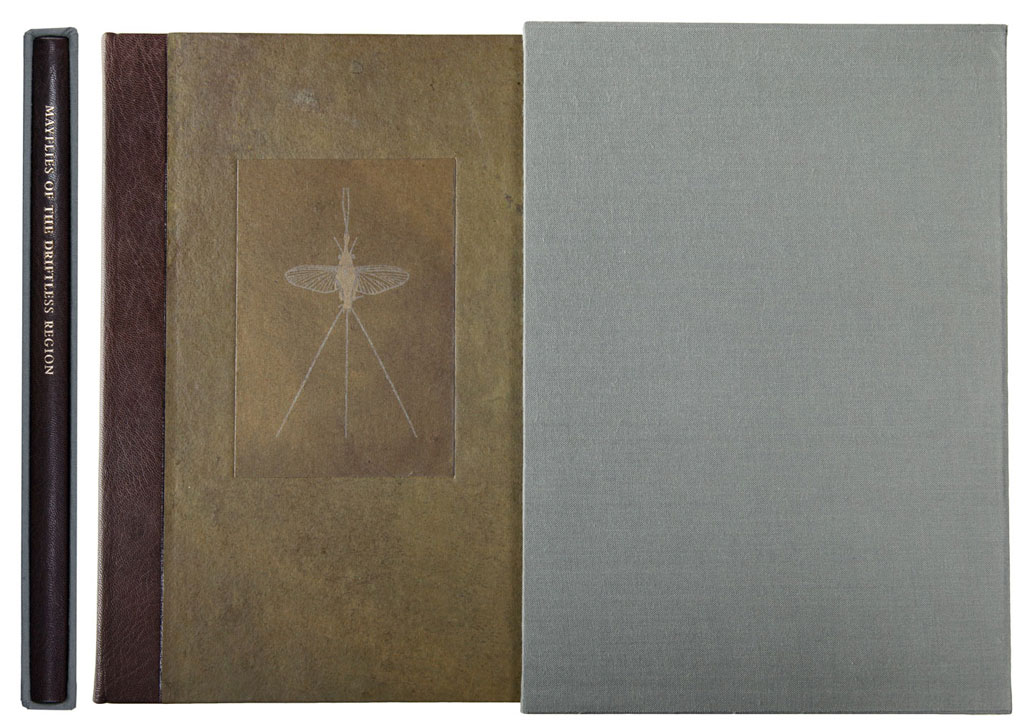
- Mayflies of the Driftless Region Standard Edition
Standard Edition by Clarke Garry and Gaylord Schanilec
Qty. 300, Price: $530
IN SHEETS Price: $380 *Free shipping on domestic orders. *International orders: you will be notified of the cost of shipping before the item is sent, and billed via PayPal after shipment.
7½ x 10½ inches. 88 pages. 300 copies. 14 color wood engravings (13 specimen plates plus a microscope) by Gaylord Schanilec. 13 entemological identifications of specimens by Dr. Clarke Garry. Hand-set in Bembo monotype. Printed on Zerkal mould-made paper. Bound in quarter leather by Gregor Campbell with handmade paper by Mary Hark. Issued in a slipcase. (Available "in sheets.") Standard Edition $530. More info & purchase
Winner of a Judges Choice Award at the 2005 Oxford Fine Press Bookfair and of the Carl Hertzog Award for "excellence in book design."
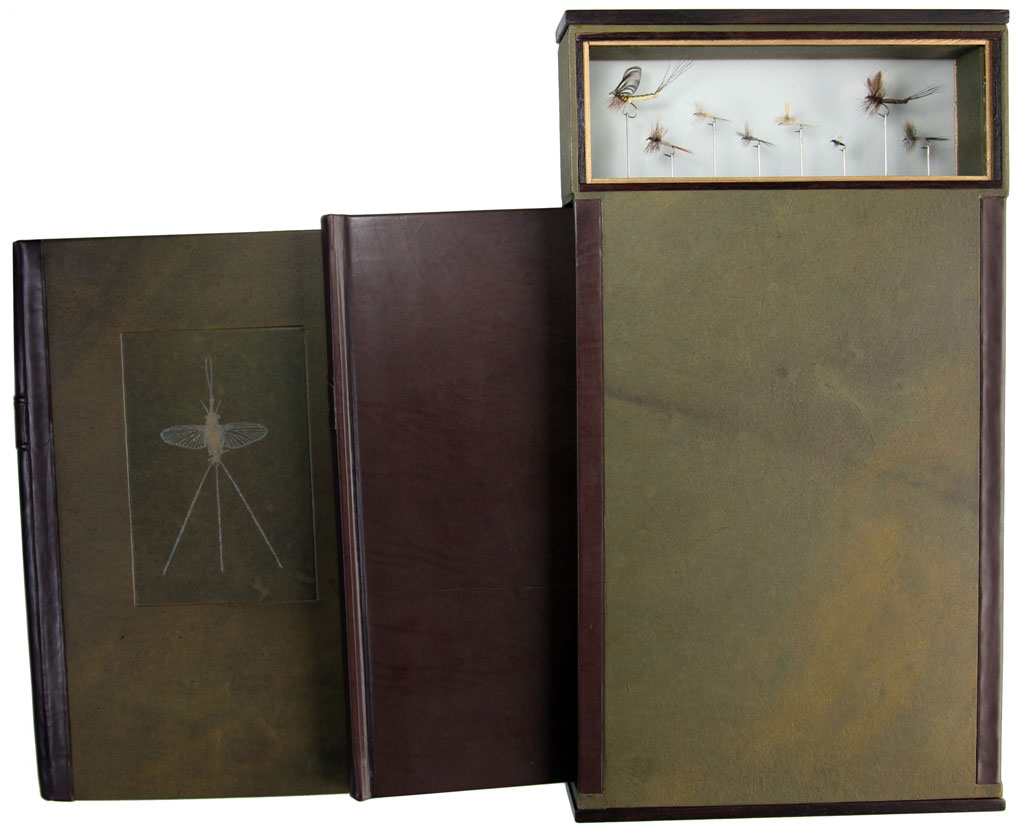
SPECIAL EDITION
7½ x 10½ inches. 88 pages. 50 copies. 14 color wood engravings (13 specimen plates plus a microscope) by Gaylord Schanilec. 13 entemological identifications of specimens by Dr. Clarke Garry. Hand-set in Bembo monotype. Plates printed on Gampi Torinoko handmade paper. Text printed on Zerkal mould-made paper. Bound in full chestnut morocco by Jill Jevne. Portfolio of the same leather, with paper sides hand made for the edition by Mary Hark, and wood contains two folders: (1) seven proof sheets and (2) an extra suite of the engravings, each titled & signed. Both volumes are housed in a slipcase (7 3/4 x 14 1/2) of leather, paper boards, and wood with a glass window at the top, revealing 8 flies hand tied for the edition by David Lucca. OUT OF PRINT.
- Mayflies of the Driftless Region, Special Edition
Special Edition by Clarke Garry and Gaylord Schanilec
Qty. 50.
OUT OF PRINT - Copies may be available on the secondary market: addall.com
Notes on the book
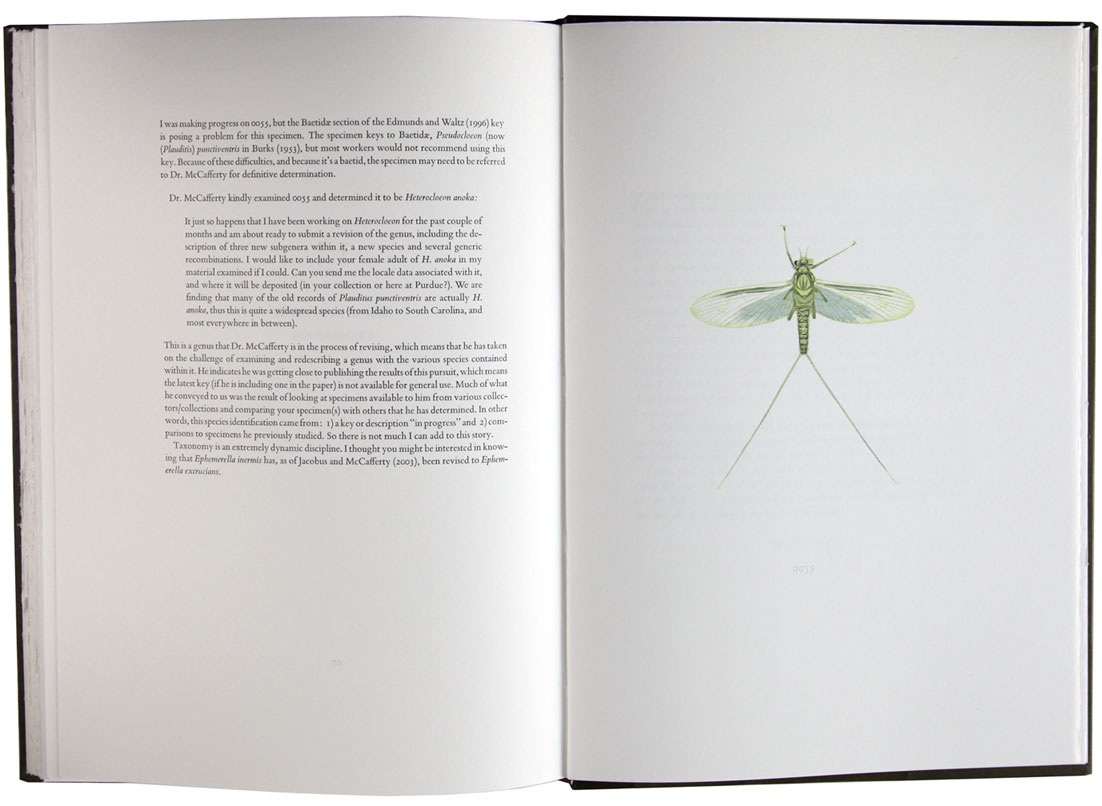
Dry Fly Entomology by Frederic M. Halford, published in London in 1897, was the inspiration for Mayflies of the Driftless Region. Halford, the Victorian innovator and popularizer of modern fly-fishing, scientifically described and surveyed the principal British mayflies of his time, but he did not claim his work as a comprehensive entomological treatise. Instead, Dry Fly Entomology was aimed at providing anglers with a basic, working understanding of the nature of aquatic insects. Mayflies of the Driftless Region can make no such claim; it is not a field guide. Instead, it is a study of mayflies by an artist.
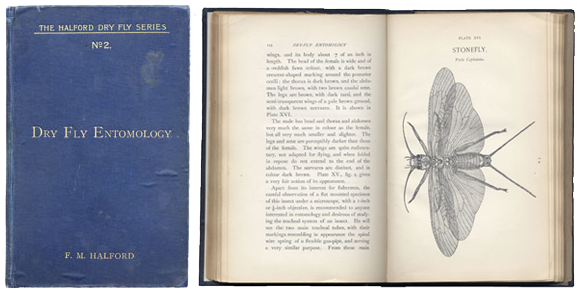 I began this project with little practical knowledge of mayfly entomology. It was not the information in Halford’s Dry Fly Entomology that caught my attention, but rather the detailed wood engravings that illustrated it. While Mayflies of the Driftless Region may provide useful information for fishermen and women of similar naïveté, the essence of the book is art. I have created 13 depictions of mayflies, color wood engravings with each hue printed from a separate block of end-grain maple. These images are the result of careful microscopic study of specimens collected from streams near my home in rural Wisconsin.
Entomologist Clarke Garry, professor of biology at the University of Wisconsin-River Falls, has written text to accompany each of the images. Professor Garry documents the series of taxonomic steps involved in the formal scientific identification of each of the specimens. In the context of a scientific journal, these identifications would likely be dry and difficult reading for most of us. However, in the pages of a finely printed book, the poetic nature of the language can be appreciated. Sometimes Dr. Garry would encounter a problem in taking a specimen to species, and, being a scientist, speculation was not an option. I urged him to make notes as to why a particular species determination proved elusive. For the final two specimens in the book, taxonomy is absent: the text is all notes. His final note: "Taxonomy is an extremely dynamic discipline. I thought you might be interested in knowing that Ephemeerella inermis has, as of Jacobus and McCafferty (2003), been revised to Ephemerella excrucians."
Science is fluid, like everything else. The scientist, and the artist, do basically the same thing: we observe the world around us, and record our observations as best we can.
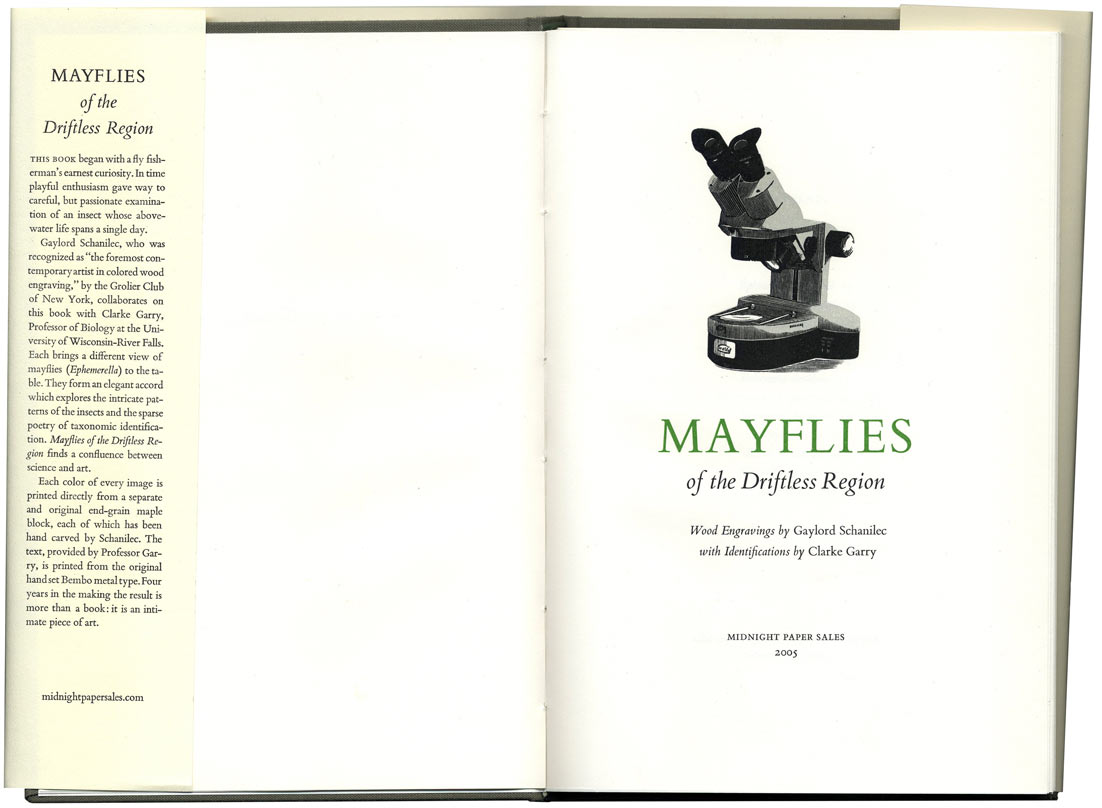
- Mayflies of the Driftless Region Trade Edition
Trade Edition by Clarke Garry and Gaylord Schanilec
Qty. 1000, Price: $85
*Free shipping on domestic orders. *International orders: you will be notified of the cost of shipping before the item is sent, and billed via PayPal after shipment.
TRADE EDITION
6 x 9 inches. 88 pages. 1,000 copies. 14 color wood engravings (13 specimen plates plus a microscope) by Gaylord Schaniec. 13 entemological identifications of specimens by Dr. Clarke Garry. Hand-set in Bembo monotype. Printed on Monadnock acid free paper. Bound in full cloth. Dust jacket. $85. More info. & purchase
The Prints
Individual signed and numbered prints from Mayflies of the Driftless Region
*Free shipping on domestic orders. *International orders: you will be notified of the cost of shipping before the item is sent, and billed via PayPal after shipment.
- MINUTE BLUEWINGED OLIVE - Baetis flavistriga
- Baetis sp.
- Baetis sp. 1
- BROWN DRAKE - E. simulans
- PALE MORNING DUN - E. inermis
- SULPHER - E. needhami
- HENDRICKSON - E. subvaria
- Heterocloeon anoka
- HEX - Hexogenia bilineata
- Stenonema? Heptagenia? sp.
- MARCH BROWN - S. vicarium sp. (male)
- MARCH BROWN - S. vicarium sp. (female)
- TRICO - Tricorythodes sp.
- BROADSIDE E. inermis Pale Morning Dun
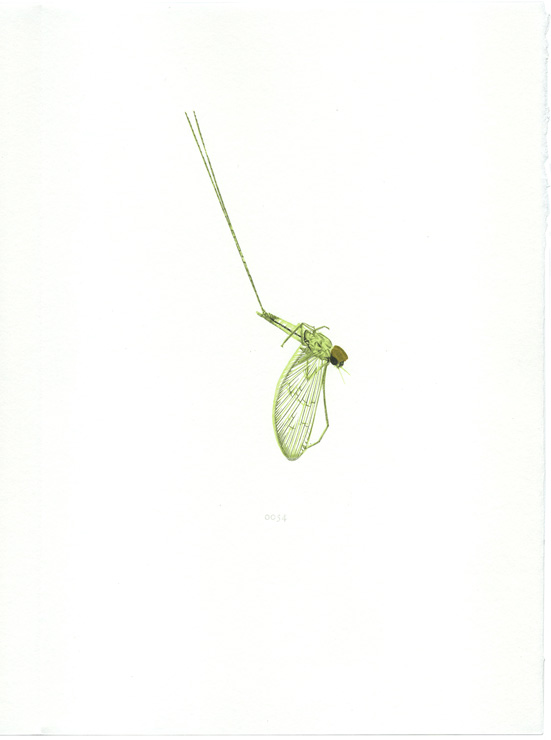
MINUTE BLUEWINGED OLIVE Baetis flavistriga
Dimensions: 2½ x 5 inches Monadnock Edition size: 200, Price: $200
Gampi Torinoko Edition size: 4, Price: $360
*Free shipping on domestic orders. *International orders: you will be notified of the cost of shipping before the item is sent, and billed via PayPal after shipment.
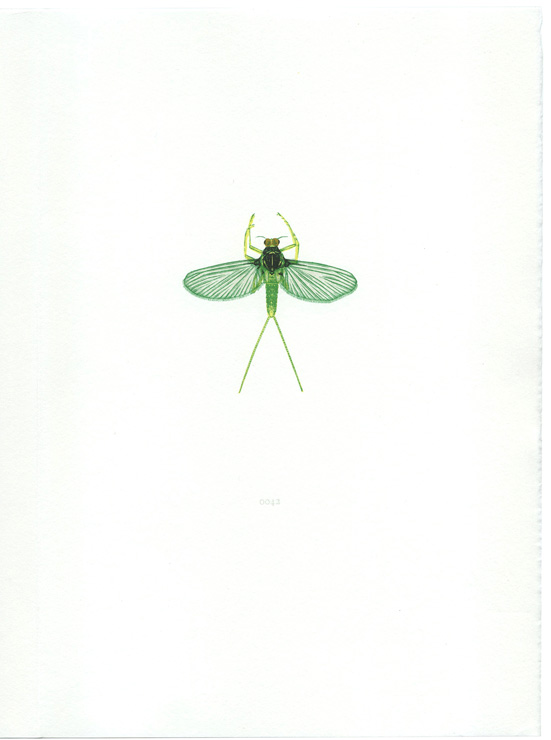
Baetis sp.
Dimensions: 2½ x 2½ inches Monadnock Edition size: 200, Price: $200
Gampi Torinoko Edition size: 3, Price: $400
*Free shipping on domestic orders. *International orders: you will be notified of the cost of shipping before the item is sent, and billed via PayPal after shipment.
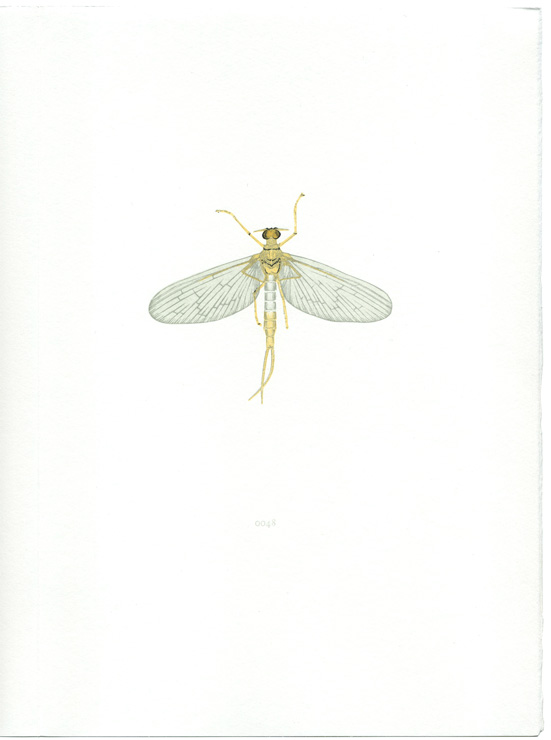
Baetis sp. 1
Dimensions: 3½ x 3¼ inches Monadnock Edition size: 200, Price: $200
Gampi Torinoko Edition size: 3, Price: $280
*Free shipping on domestic orders. *International orders: you will be notified of the cost of shipping before the item is sent, and billed via PayPal after shipment.
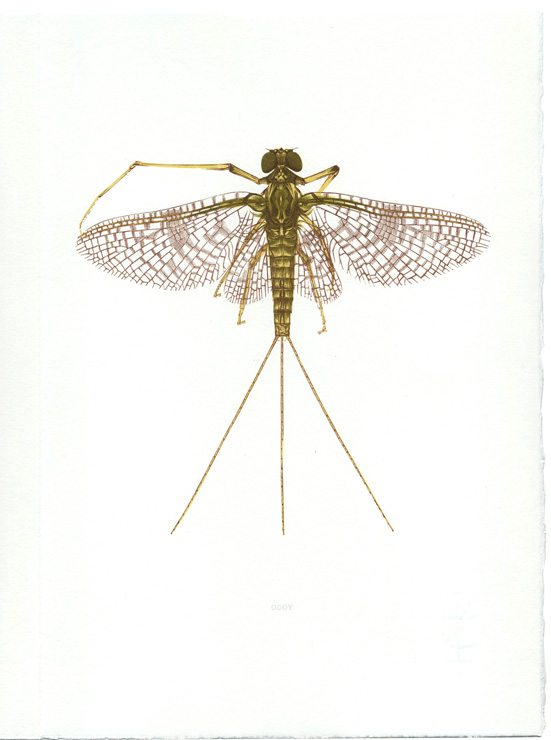
BROWN DRAKE Ephemera simulans
Dimensions: 6 x 5½ inches Monadnock Edition size: 360, Price: $200
Gampi Torinoko Edition size: 6, Price: $360
*Free shipping on domestic orders. *International orders: you will be notified of the cost of shipping before the item is sent, and billed via PayPal after shipment.
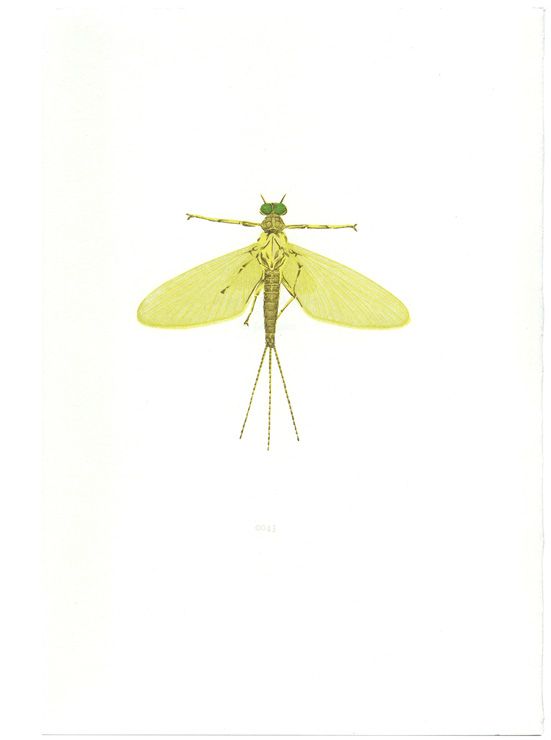
PALE MORNING DUN Ephemerella inermis
Dimensions: 4 x 3½ inches Monadnock Edition size: 250, Price: $200
*Free shipping on domestic orders. *International orders: you will be notified of the cost of shipping before the item is sent, and billed via PayPal after shipment.
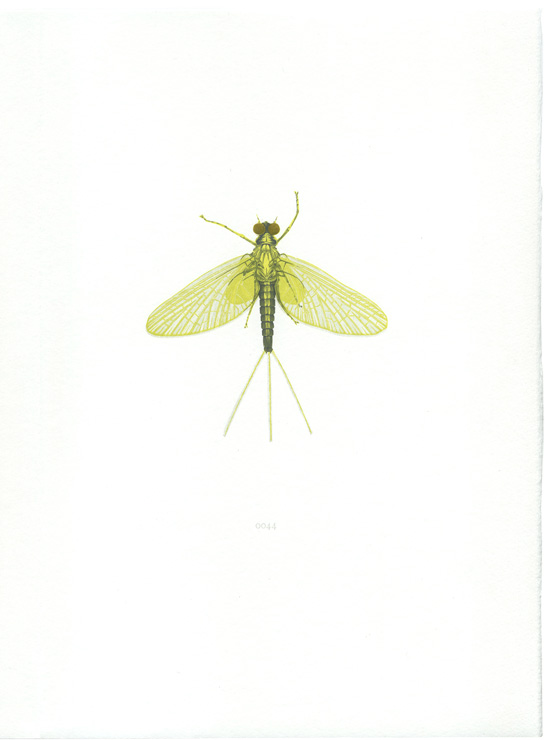
SULPHER E. needhami
Dimensions: 3½ x 3½ inches Monadnock Edition size: 195, Price: $200
Gampi Torinoko Edition size: 2, Price: $360
*Free shipping on domestic orders. *International orders: you will be notified of the cost of shipping before the item is sent, and billed via PayPal after shipment.
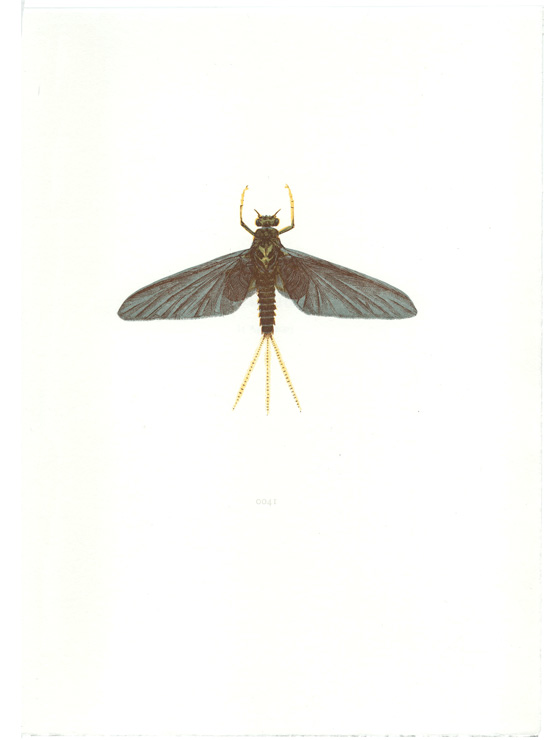
HENDRICKSON E. subvaria
Dimensions: 4½ x 3¼ inches Monadnock Edition size: 250, Price: $200
Gampi Torinoko Edition size: 1, Price: $280
*Free shipping on domestic orders. *International orders: you will be notified of the cost of shipping before the item is sent, and billed via PayPal after shipment.
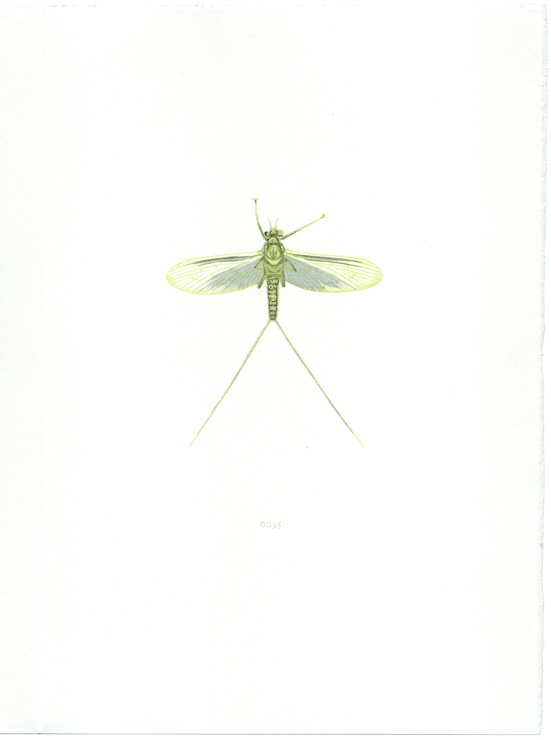
Heterocloeon anoka
Dimensions: 3 x 3½ inches Monadnock Edition size: 230, Price: $200
Gampi Torinoko Edition size: 3, Price: $360
*Free shipping on domestic orders. *International orders: you will be notified of the cost of shipping before the item is sent, and billed via PayPal after shipment.
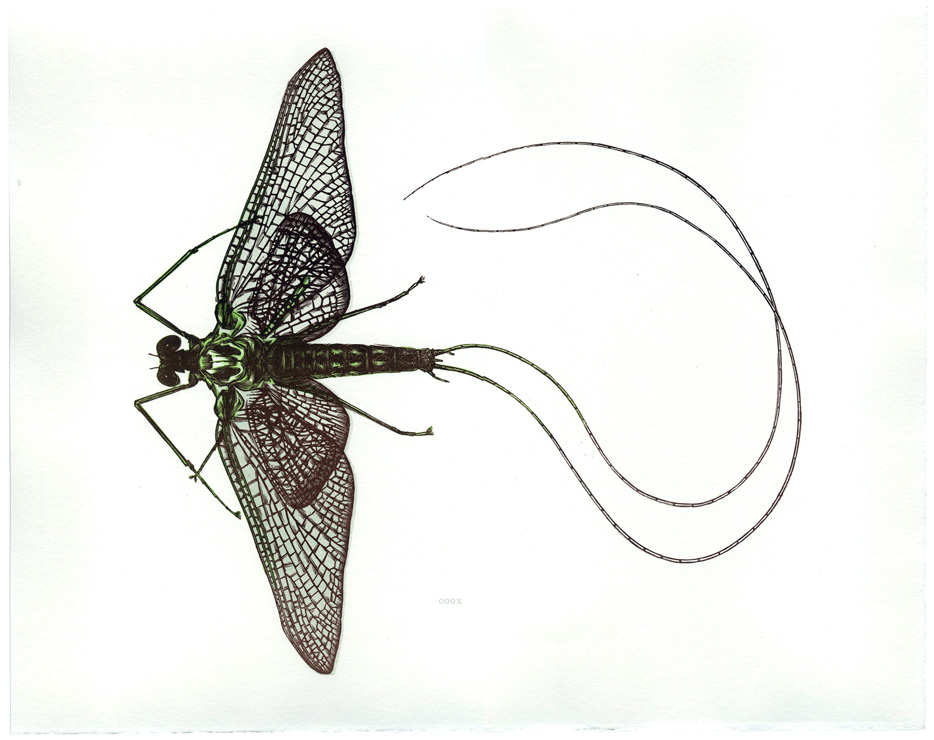
HEX Hexogenia bilineata
Dimensions: 9½ x 9 inches Monadnock Edition size: 125, Price: $200
*Free shipping on domestic orders. *International orders: you will be notified of the cost of shipping before the item is sent, and billed via PayPal after shipment.
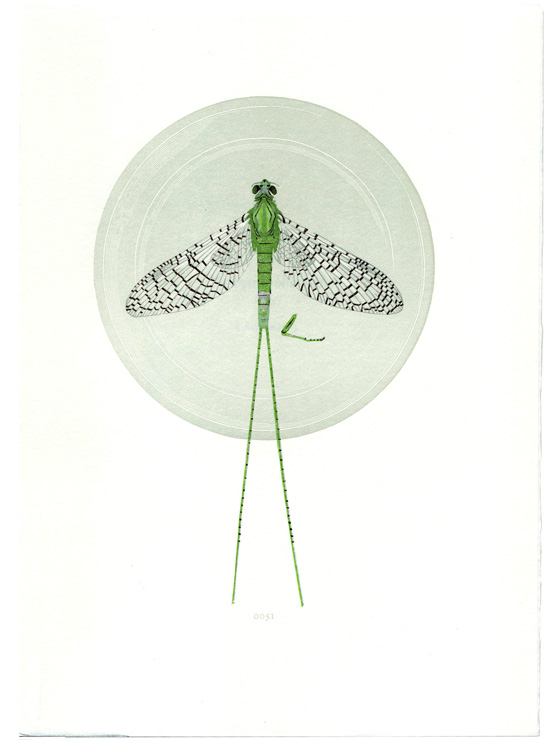
Stenonema? Heptagenia? sp.
Dimensions: 5 x 7 inches Monadnock Edition size: 200, Price: $200
*Free shipping on domestic orders. *International orders: you will be notified of the cost of shipping before the item is sent, and billed via PayPal after shipment.
Gampi Torinoko Edition size: 2, Price: $360 OUT OF PRINT
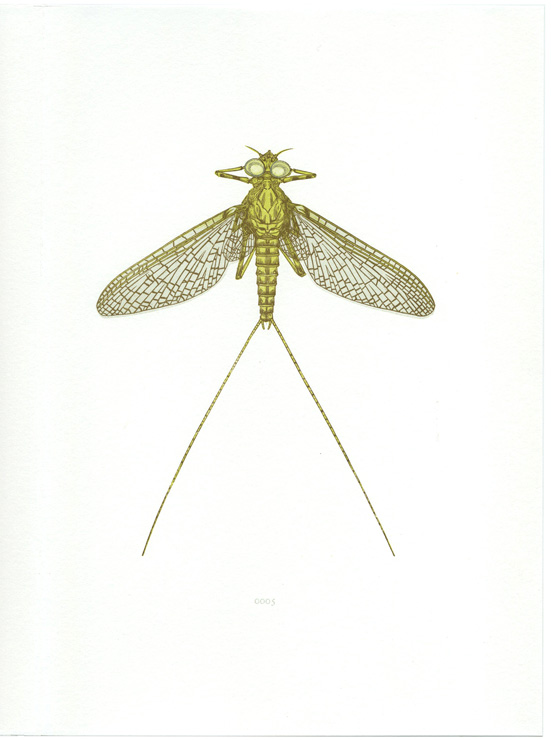
MARCH BROWN S. vicarium sp. (male)
Dimensions: 5 x 6 inches Monadnock Edition size: 235, Price: $225
*Free shipping on domestic orders. *International orders: you will be notified of the cost of shipping before the item is sent, and billed via PayPal after shipment.
Gampi Torinoko Edition size: 2, Price: $360
OUT OF PRINT
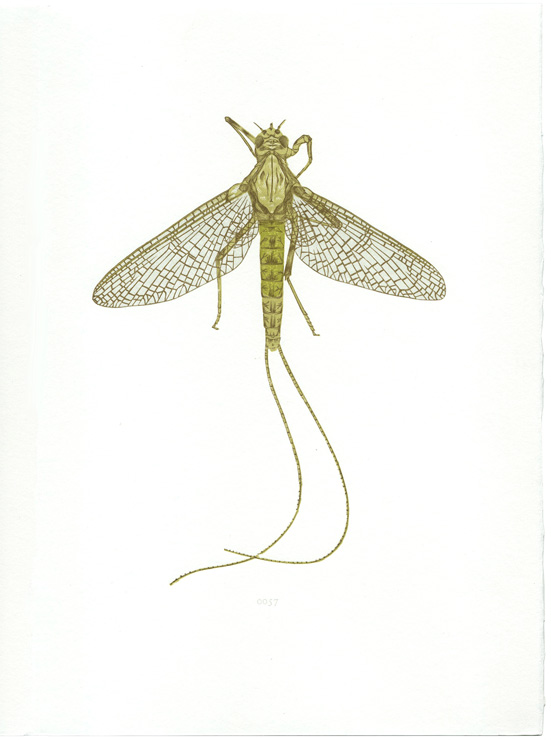
MARCH BROWN S. vicarium sp. (female)
Dimensions: 5 x 7 inches Monadnock Edition size: 265, Price: $225
*Free shipping on domestic orders. *International orders: you will be notified of the cost of shipping before the item is sent, and billed via PayPal after shipment.
Gampi Torinoko Edition size: 2, Price: $360
OUT OF PRINT
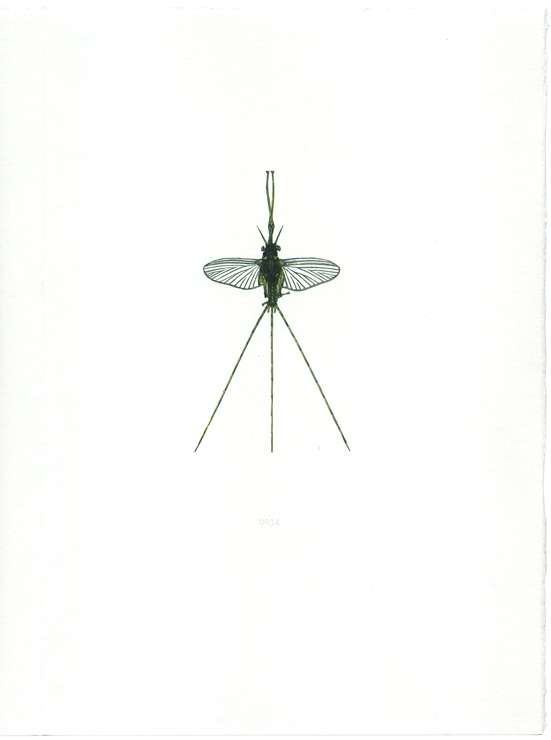
TRICO Tricorythodes sp.
Dimensions: 2¼ x 4 inches Monadnock Edition size: 260, Price: $200
Gampi Torinoko Edition size: 2, Price: $360
*Free shipping on domestic orders. *International orders: you will be notified of the cost of shipping before the item is sent, and billed via PayPal after shipment.
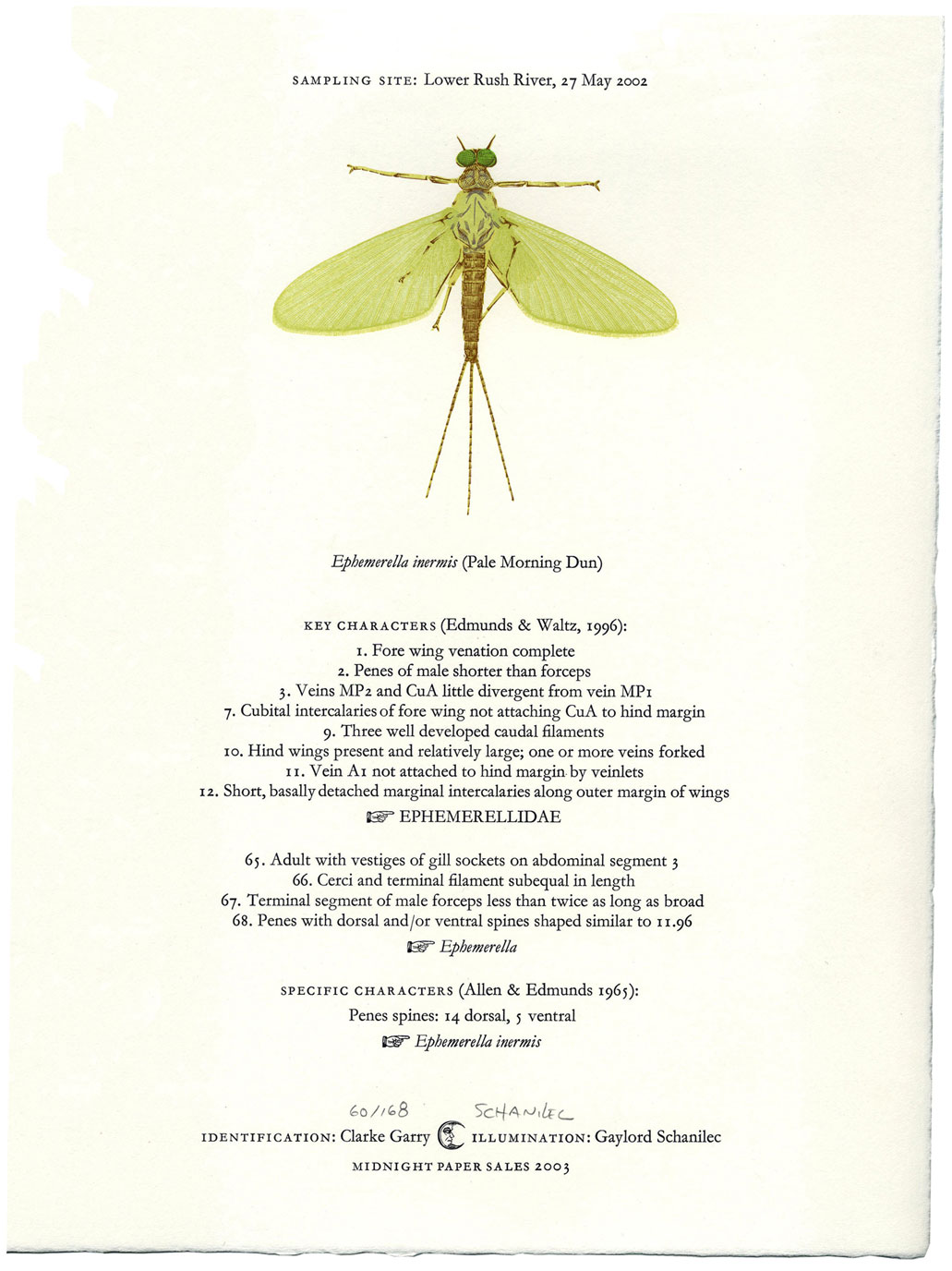
Ephemerella inermis Broadside
Clarke Garry,
Midnight Paper Sales, 2003.
Dimensions: 9 x 12 inches
Zerkall Edition size: 168, Price: $65
*Free shipping on domestic orders. *International orders: you will be notified of the cost of shipping before the item is sent, and billed via PayPal after shipment.
COMPLETE SETS OF PRINTS
Monadnock, Edition set size: 13, Price: $2,000